
Summer is here--and so are postcards from Tučepi
A brief trip to former Yugoslavia, to an old place with many new (1970s) hotels from the golden age of mass tourism

Things have been quiet these past weeks, mainly due to the winding down of the term, the end of the school-year, and the exigencies of writing a book.
With the first two of these things firmly in the rearview mirror, I shall post more regularly once again in the next weeks and months.
And what better way to open the summer of 2026 with a few postcards from Tučepi, Croatia, “a village and the only settlement in the eponymous municipality in the Split-Dalmatia County, Croatia”. From Wikipedia, we learn a lot “more”:
It is located on the Adriatic coast of Dalmatia known as Makarska riviera, about 5 km southeast of Makarska. It is a popular tourist destination thanks to its scenic coastline.
History
The settlement of Tučepi was first settled four thousand years ago by the Illyrians. Until the earthquake of 1962, the majority of its inhabitants were living in scattered hamlets like Gornji Tučepi, Podpeč, Čovići, Srida Sela, Šimići and Podstup at the lower foot of the mountain Biokovo and since the 18th century these towns have seen a gradual process of depopulation, as their inhabitants began moving down to Tučepi-Kraj,[3] now a 4-km long resort. Name from the Slavic tucha cloud.
With these preliminaries sorted out, let’s go for a trip, shall we?
Tučepi in Bright Colours
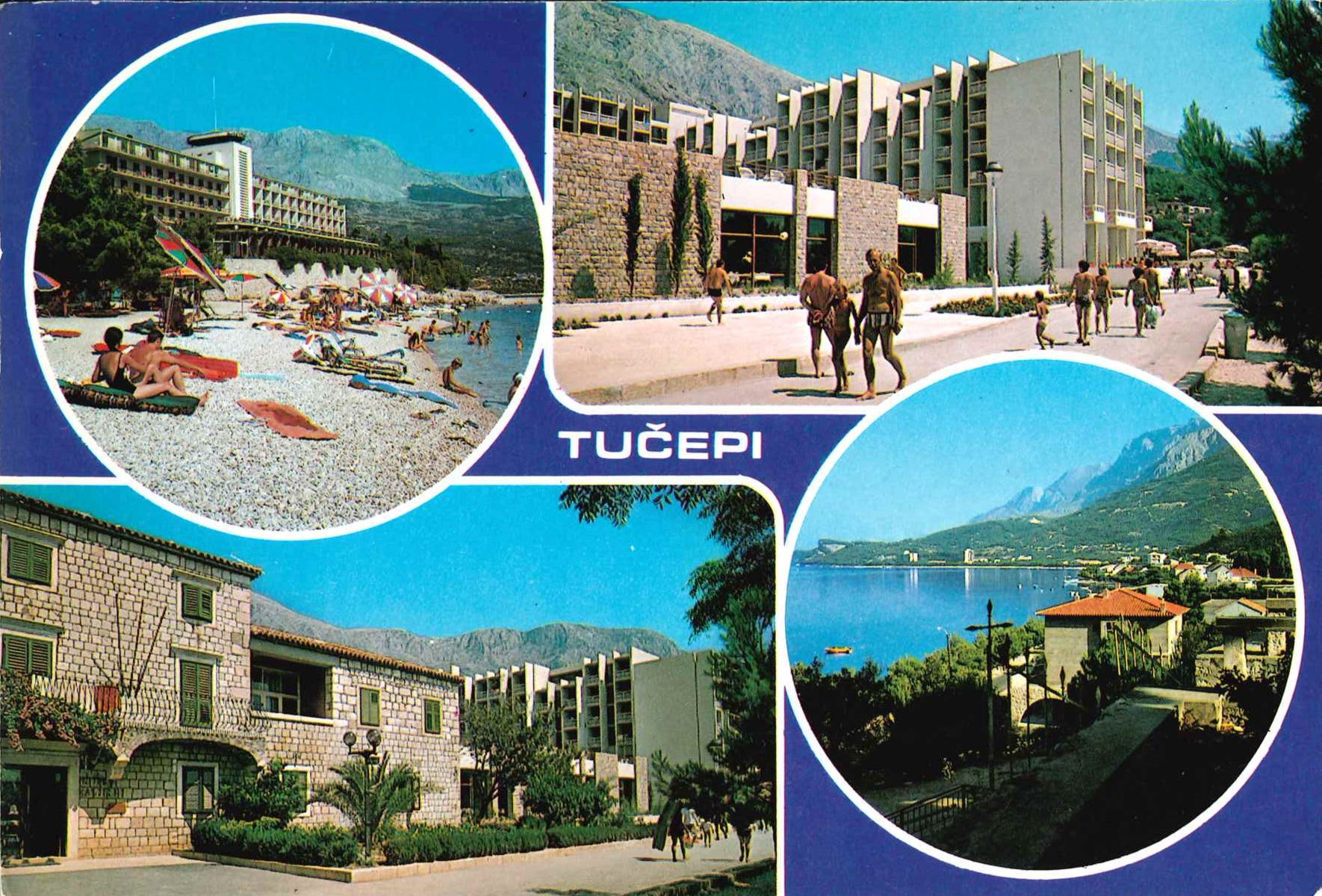
Above, a postcard mailed in summer of 1981, showing Tučepi’s main sights—the beautiful scenery, brutalist hotels, and otherwise sleepy streets (with most tourists spending time at the beach).
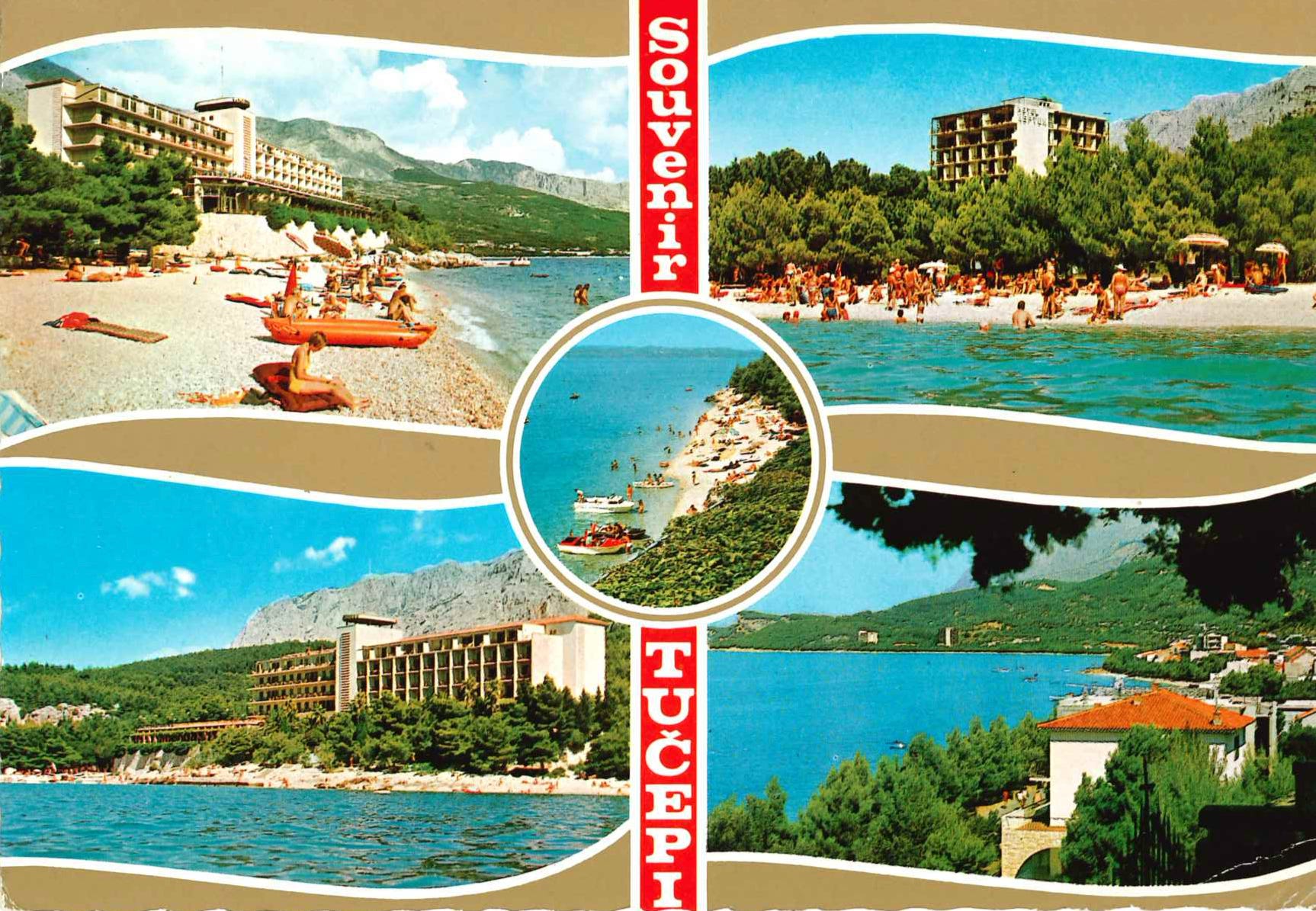
Below, the waterfront and beaches are even more pronounced in this postcard mailed in 1977 whose backside includes the quite-typical post-WW2 postcard greetings:
Awe-inspiring countryside and good food!
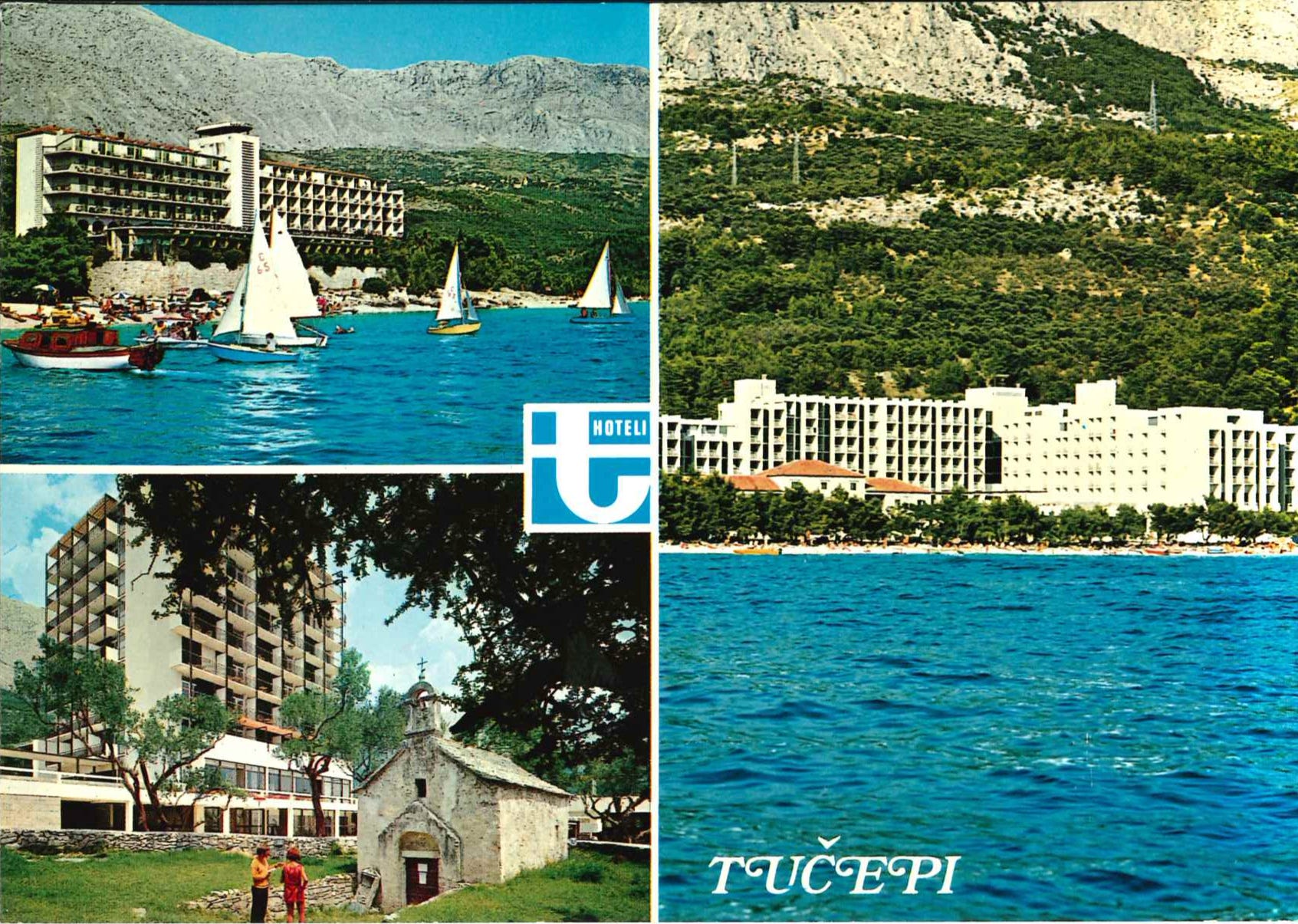
Moving on, below, another postcard mailed in 1978 also shows a cultural-historical gem of Tučepi, the Old Church of St George (Croatian: Sv. Jure) from 1311 (in the bottom-left image), a single-nave Romanesque-Gothic Church; it was restored in 1992/1993, and its also part of the town’s heraldic sign.
Speaking of mountains once more, the German Wikipedia entry also notes the following about the area (my translation):
Tučepi is a starting point for mountaineers in the Biokovo Mountains. The seaside resort also boasts hotels, guesthouses, several kilometers of beach, and secluded coves. Tučepi’s white pebble beaches, surrounded by pine trees, are a defining feature of the town and the surrounding area.
The appeal to mountaineers is clearly visible in the below postcard mailed in 1976:
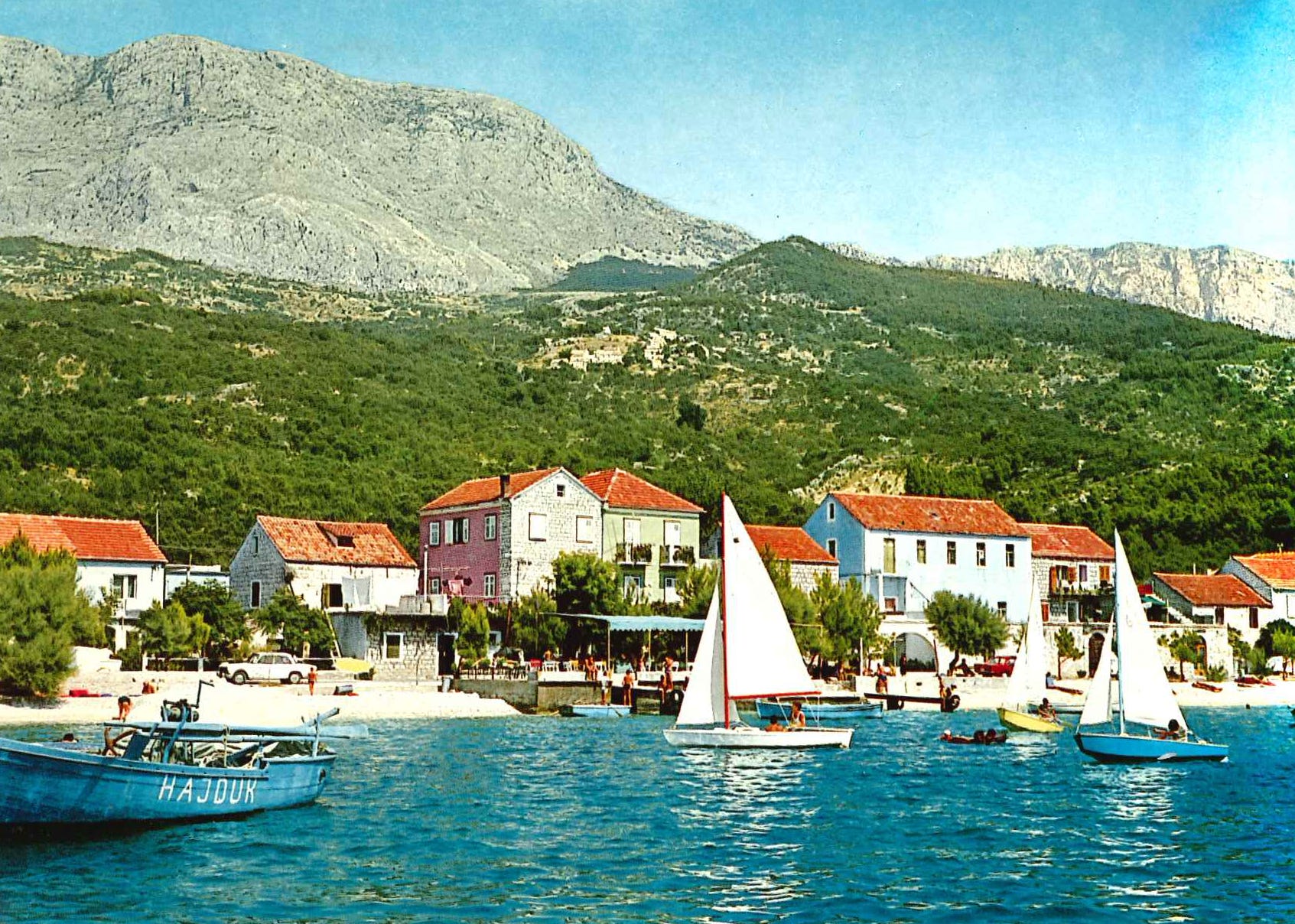
Do note the blue boat in the foreground—it bears the name “Hajduk”, which means (Wikipedia, with emphases added by me):
A hajduk (Hungarian: hajdúk, plural of hajdú ‘foot-soldier’) was initially a type of irregular infantry found in Central, Eastern, and parts of Southeast Europe from the late 16th to mid 19th centuries.[1] Eventually the term was used for armed outlaws. The two categories share a reputation ranging from bandits to freedom fighters, depending on time, place, and their enemies.
In the European lands of the Ottoman Empire, the term hajduk was used to describe bandits and brigands of the Balkans, while in Central Europefor the West Slavs, Hungarians, and Germans, and Eastern Europe for the Ukrainians, it was used to refer to outlaws who protected Christians against provocative actions by the Ottomans.[2] The term originates from Hajdú County of the Kingdom of Hungary.[3]
By the 17th century they were firmly established in the Ottoman Balkans, owing to increased taxes, Christian victories against the Ottomans, and a general decline in security. Hajduk bands typically consisted of ten to thirty men, exceptionally up to one hundred, with a clear hierarchy under a single leader. They targeted Ottoman representatives and rich people, mainly rich Turks, for plunder, punishment of oppressive Ottomans, revenge, or a combination of all.[2]
In Balkan folkloric tradition, the hajduk is a romanticised hero figure who steals from, and leads his fighters into battle against, the Ottoman authorities.[4]
As an aside, I also have a bunch of postcards from former Yugoslavia showing people in traditional garb, which I lovingly refer to as “Balkan Bandits” for these reasons. Sadly, I haven’t scanned them yet, hence their depiction all have to wait for now …
Below, for comparative reasons, a postcard sent from Tučepi’s seaside in 1965 …
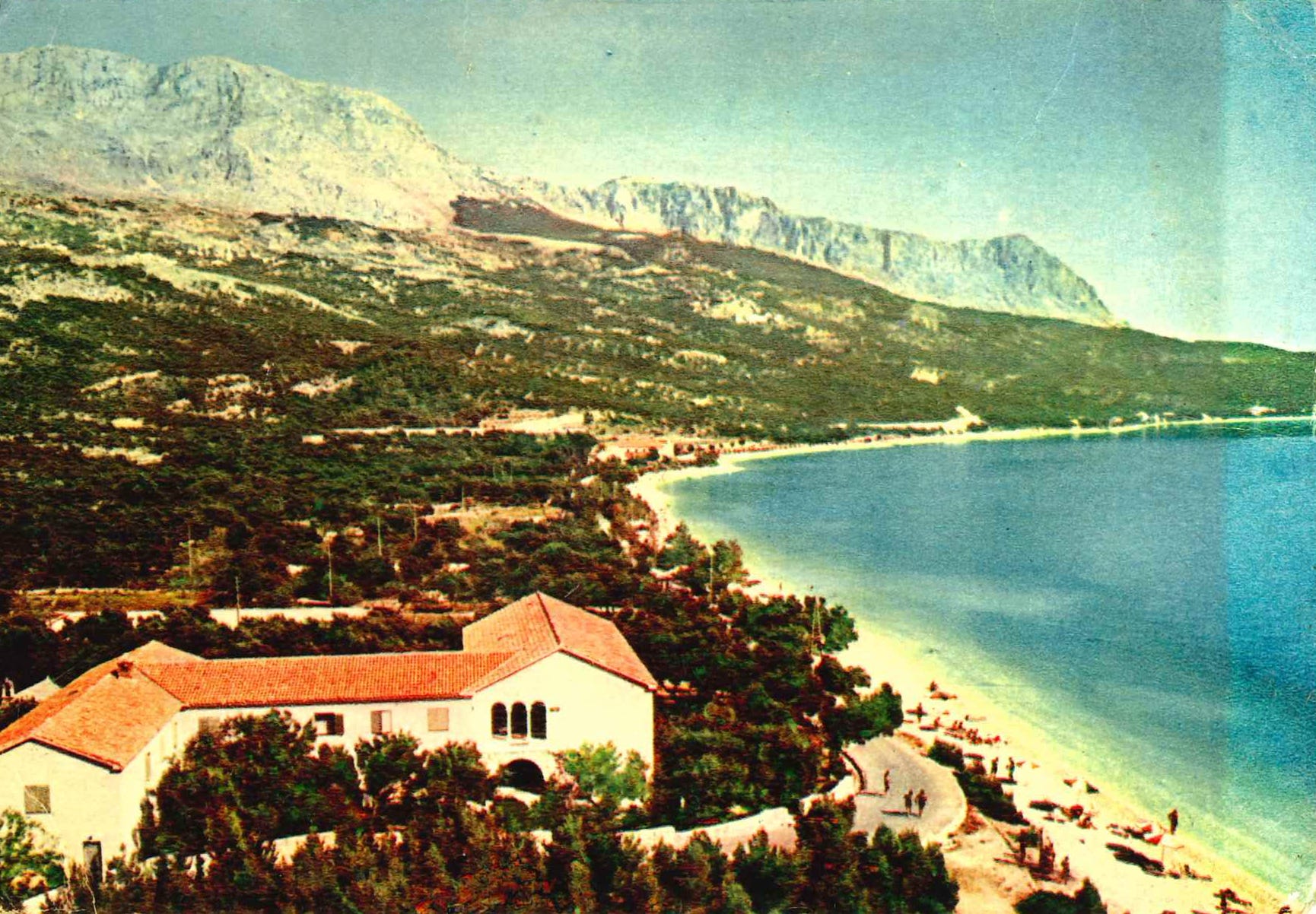
… which compares quite starkly to the one shown below, mailed in 1971.
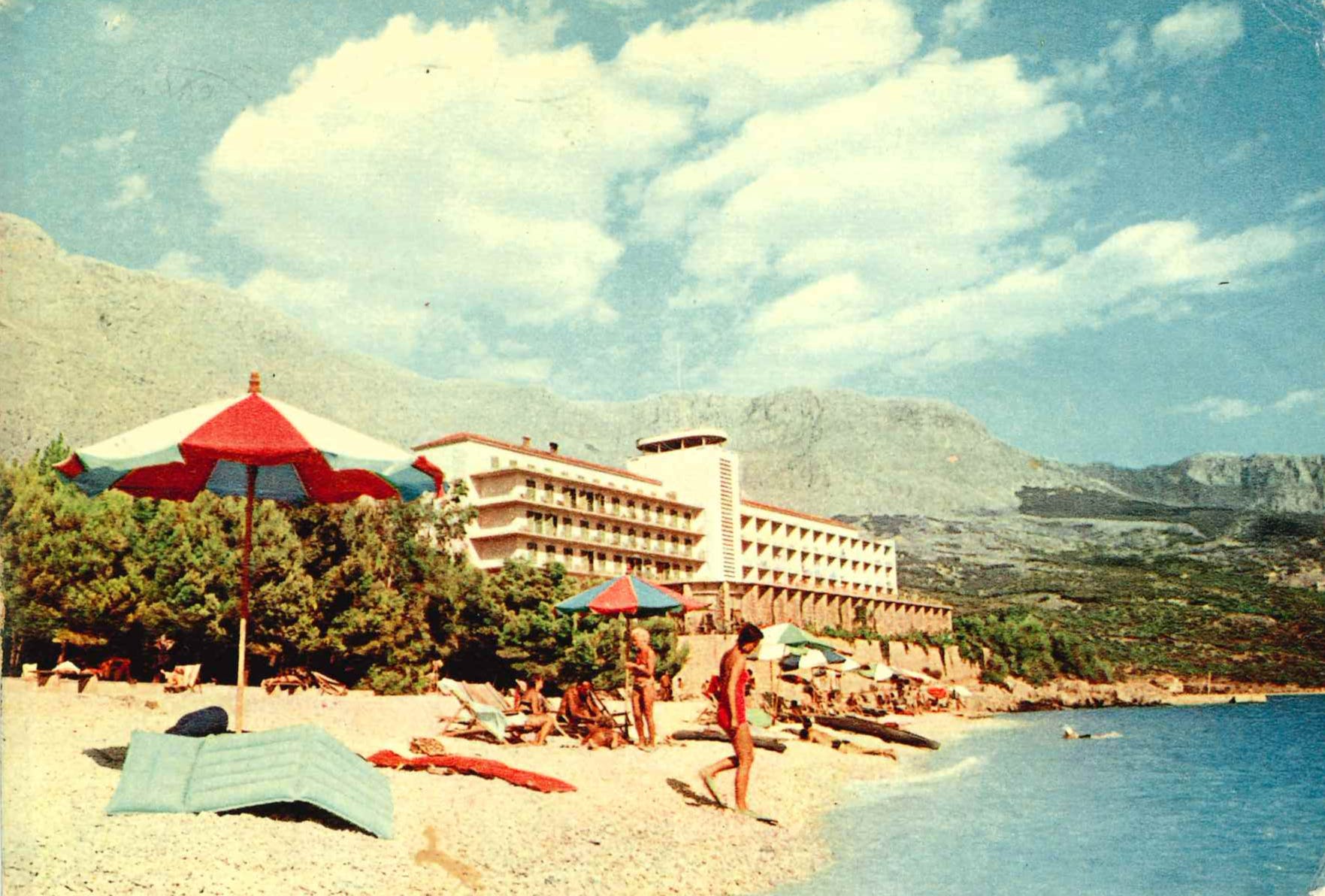
Mass tourism is among the chief drivers of both post-1945 economic development and the rapidly increasing amount of postcards from places that would not have been travel-worthy, let alone developed to such a degree that it would pay off to manufacture postcards.
You know, places like Tučepi.
But that’s a topic for another day; in the meantime, enjoy the summer, would you?
Ok, so names like Hajduk Split for football teams make sense.
Winter here.